
Elsewhere
An immersive storytelling experience exploring conflict, psychological distance, and collective responsibility.
Project
University Project
Year
2026
Role
Creative Direction
Interactive Design
Design Research
Inclusive Design
Industry
Education
Location
Amsterdam
The Challenge
We live in a world where we are more connected than ever, yet increasingly disconnected from one another.
Every day we consume images of war, displacement, environmental collapse, and humanitarian crises through endless streams of content. These realities appear on our screens for a few seconds before being replaced by something else.
The result is a growing psychological distance between ourselves and the systems shaping the lives of millions of people.
Conflict becomes something happening somewhere else.
To someone else.
Elsewhere was created to challenge that distance.
Why Now?
Today’s conflicts are rarely isolated events.
They are connected to global systems of resource extraction, geopolitics, militarization, labor, media, and unequal distributions of power.
While many people feel disconnected from these realities, we remain connected to them through the products we consume, the information we receive, and the political systems we participate in.
At a time when wars, displacement, polarization, and misinformation dominate global conversations, there is an urgent need for experiences that help people slow down, reflect, and critically engage with complexity.
Elsewhere explores how immersive storytelling can create that space.
A Personal Starting Point
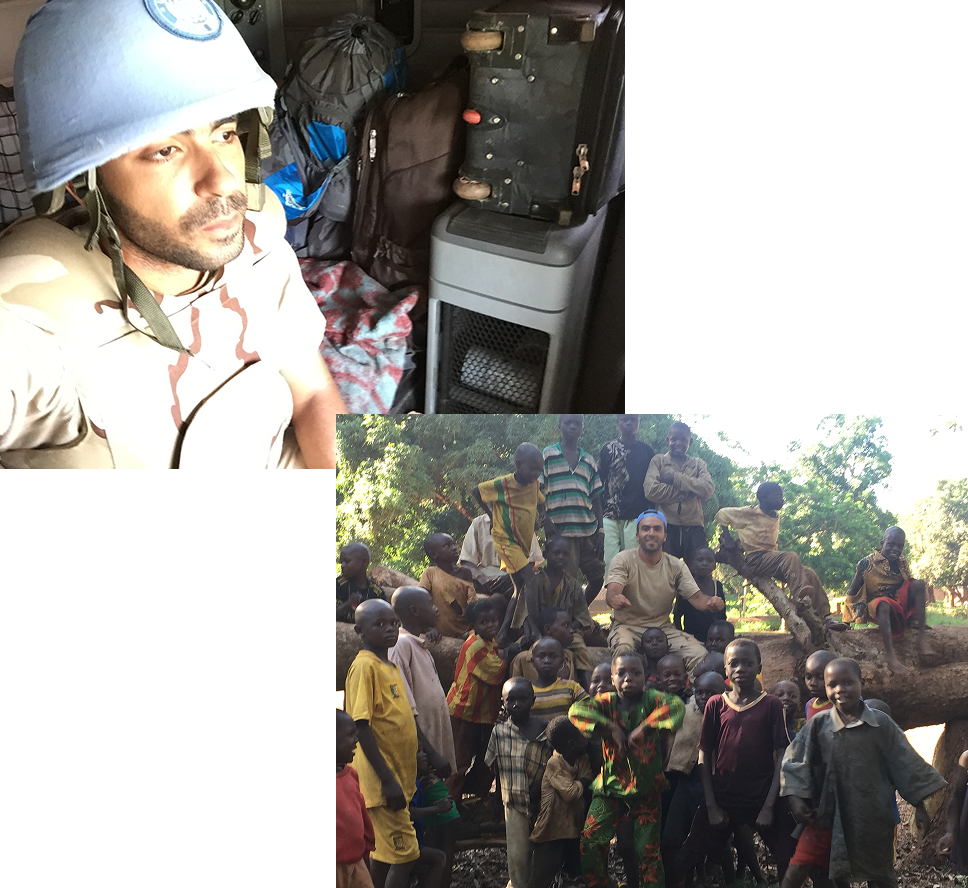
In 2014, I was deployed to the Central African Republic as part of the United Nations peacekeeping mission MINUSCA during my mandatory military service.
Living inside a conflict zone exposed me to realities that rarely appear in public narratives. It also revealed how quickly conflict can become normalized through routine, bureaucracy, media distance, and institutional systems.
Years later, those experiences remained with me.
What began as an idea for a photography book gradually evolved into something larger.
I became interested in a different question:
How can design help people engage with distant realities in a more meaningful way?
That question became Elsewhere.
From Usability to Emotional Depth
The project emerged from my desire to expand my design practice beyond traditional user-centered approaches focused on efficiency, usability, and task completion.
While these principles remain valuable, they often leave little room for reflection, ambiguity, emotion, or critical thought.
Elsewhere explores a different direction.
Rather than asking:
“How can we help users complete a task?”
The project asks:
“How can design help people reflect on their relationship to the world around them?”
This shift became a central part of my research and design process.
The Experience
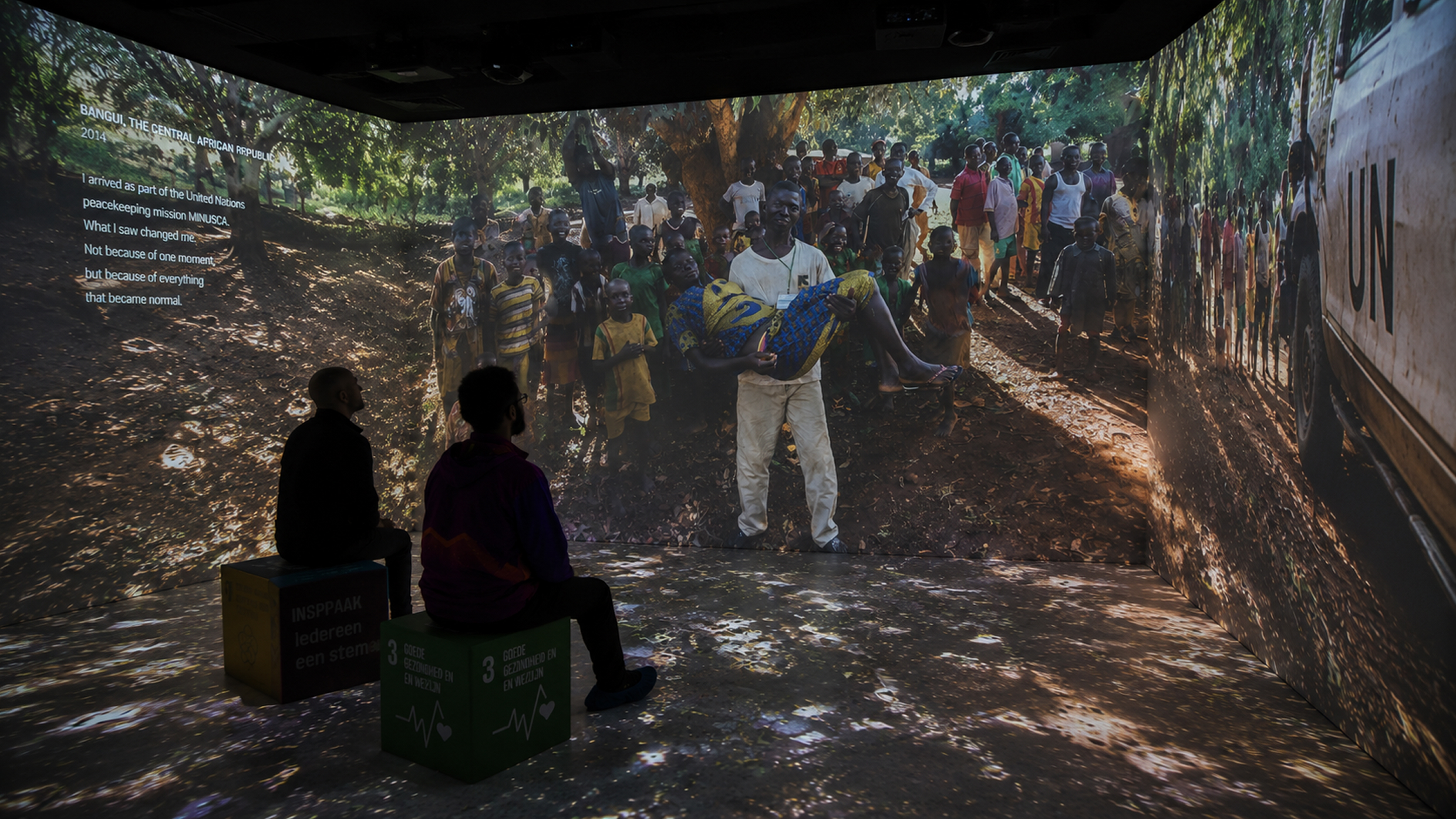
Elsewhere combines photography, personal testimony, projection, sound, moving image, and spatial storytelling.
Audiences enter a quiet immersive environment where a personal narrative unfolds through a five-act structure.
The story begins with arrival.
It moves through military life, uncertainty, encounters with local communities, and eventually expands into larger questions about power, systems, and responsibility.
The experience intentionally avoids graphic violence and shock-based storytelling.
Instead, it relies on atmosphere, pacing, intimacy, and reflection.
The goal is not to tell audiences what to think.
The goal is to create the conditions for reflection.
Design Principles
The project is guided by four core principles:
Human Before Spectacle
Conflict is often represented through dramatic imagery and emotional intensity.
Elsewhere focuses on human experiences rather than spectacle.
Reflection Before Information
The project does not aim to educate through facts alone.
It creates a space where audiences can critically engage with complex realities.
Systems Rather Than Events
Conflict is framed not as a singular event but as part of larger political, economic, and social systems.
Care Before Consumption
The experience prioritizes ethical representation over emotional impact.
Questions of consent, agency, and responsibility remain central throughout the design process.
Research & Validation
The project is grounded in:
• Personal testimony and field photography
• Research into conflict economies and resource-driven conflicts
• Studies on empathy, immersive storytelling, and representation
• Ethical reflection on trauma and narrative authority
• Audience testing and feedback
The first prototype was tested with participants in the HvA Immersive Lab.
Participants described the experience as reflective, intimate, emotionally engaging, and thought-provoking.
Many left reflecting on different aspects of the story, including privilege, military service, responsibility, and their relationship to global systems.
Perhaps most importantly, participants did not leave with the same takeaway.
Each person carried away a different question.
Ethical Considerations
Elsewhere does not present itself as an objective account.
It is a subjective experience shaped through personal testimony.
Throughout development, the project continuously questioned:
Who has the right to tell these stories?
How can conflict be represented without exploitation?
Can immersive experiences create empathy without emotional manipulation?
How can vulnerable communities be represented responsibly?
These questions remain active parts of the project rather than problems to be solved.
Current Status
Funding would support:
• Multi-room immersive environments
• Expanded projection systems
• Advanced audiovisual production
• Interactive reflection spaces
• Further user testing
• Exhibition production
• Cultural and educational partnerships
• Ethical consultation and research
In parallel, the project will continue exploring opportunities for collaboration with cultural institutions, museums, educational organizations, and NGOs.
Vision
Elsewhere is not a project about war.
It is a project about distance.
It explores how immersive storytelling can help people move beyond passive observation and engage more deeply with the systems, stories, and realities that connect us.
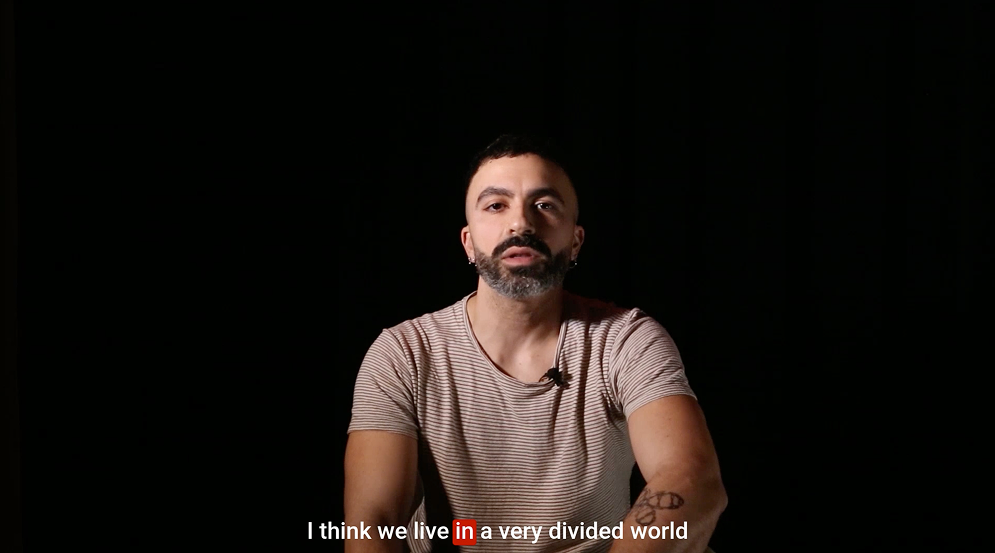
In a world increasingly defined by division, information overload, and emotional fatigue, Elsewhere asks a simple question:
What changes when distant realities stop feeling distant?