Grow with Jo
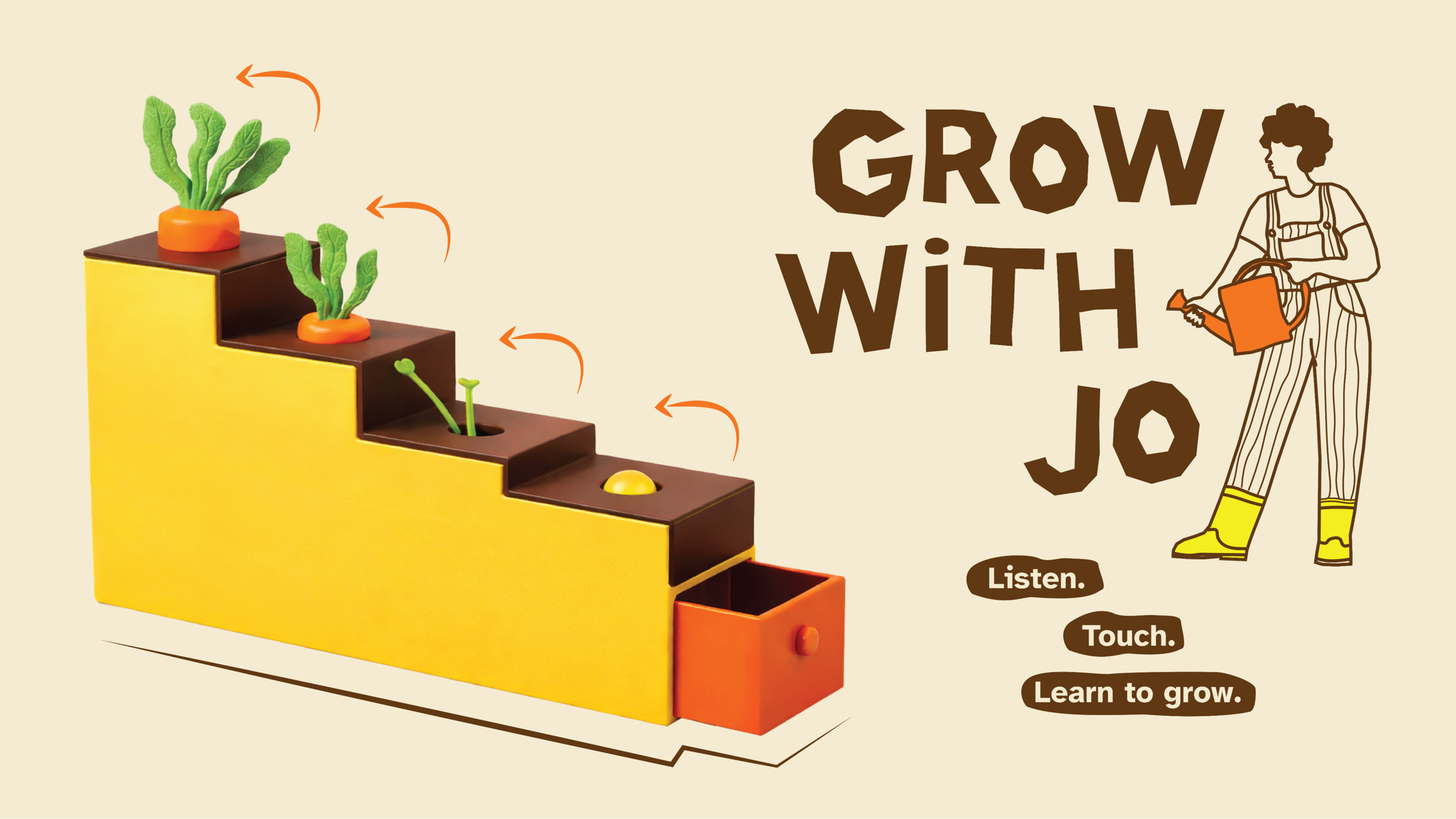
A tactile educational game that teaches visually impaired and sighted children about the carrot lifecycle through touch, sound, and play.
Project
University Project
Year
2025
Role
Creative Direction
Interactive Design
Design Research
Inclusive Design
Industry
Education
Location
Amsterdam
About the project
Most learning tools for visually impaired children rely on braille or visual cues, which are not accessible to all. In reality, many children depend more on touch, spatial understanding, and sound to explore the world. This creates a gap in early education, where learning often becomes either passive or exclusionary.
The challenge was to design an experience that is self-explanatory, tactile, and engaging, allowing children to learn independently while also encouraging shared play between visually impaired and sighted users.
The Solution
Grow with Jo introduces a story-driven tactile game where children help Jo the Farmer grow a carrot from seed to full harvest. Instead of relying on instructions, the experience unfolds through interaction and feedback.
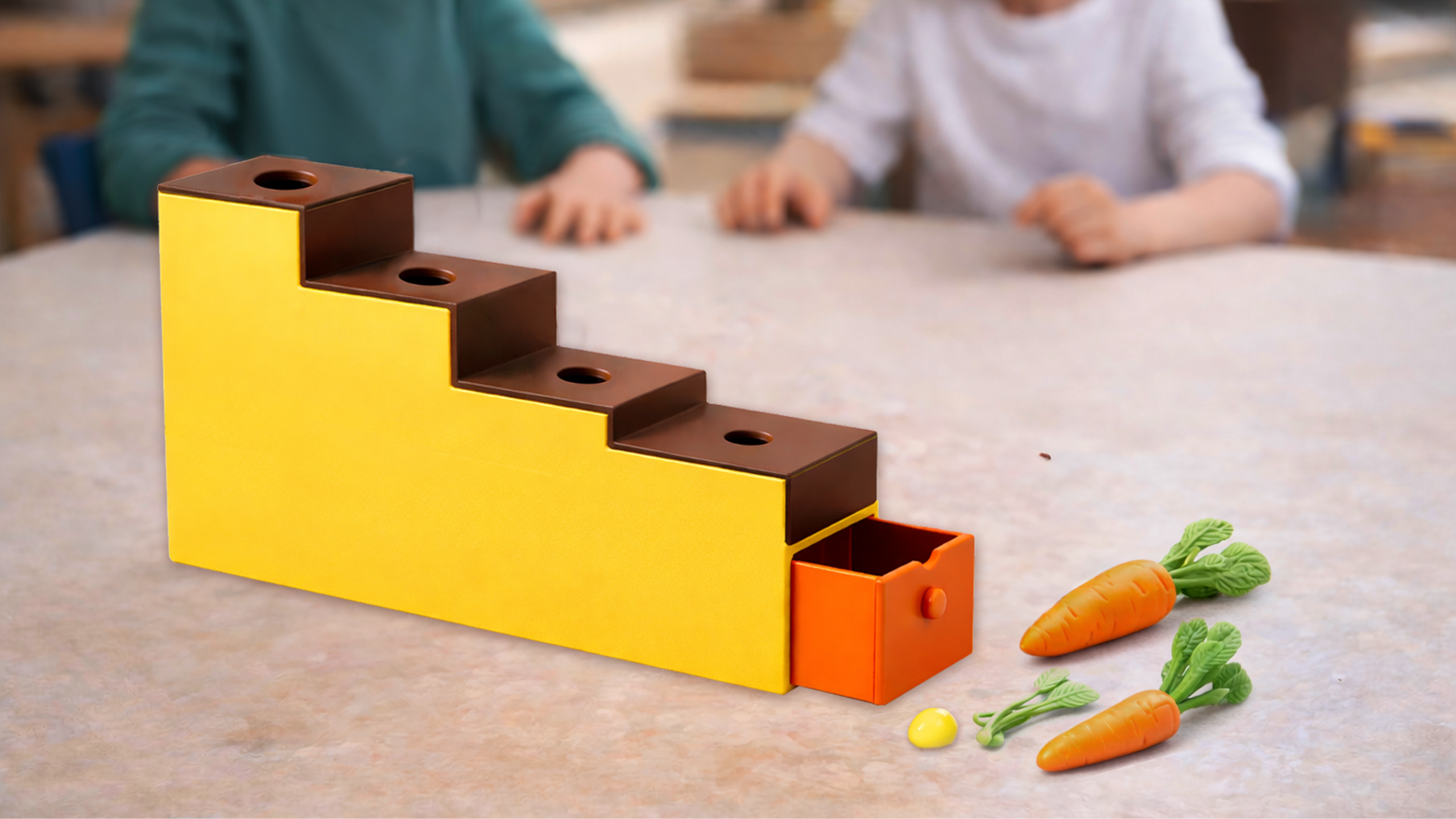
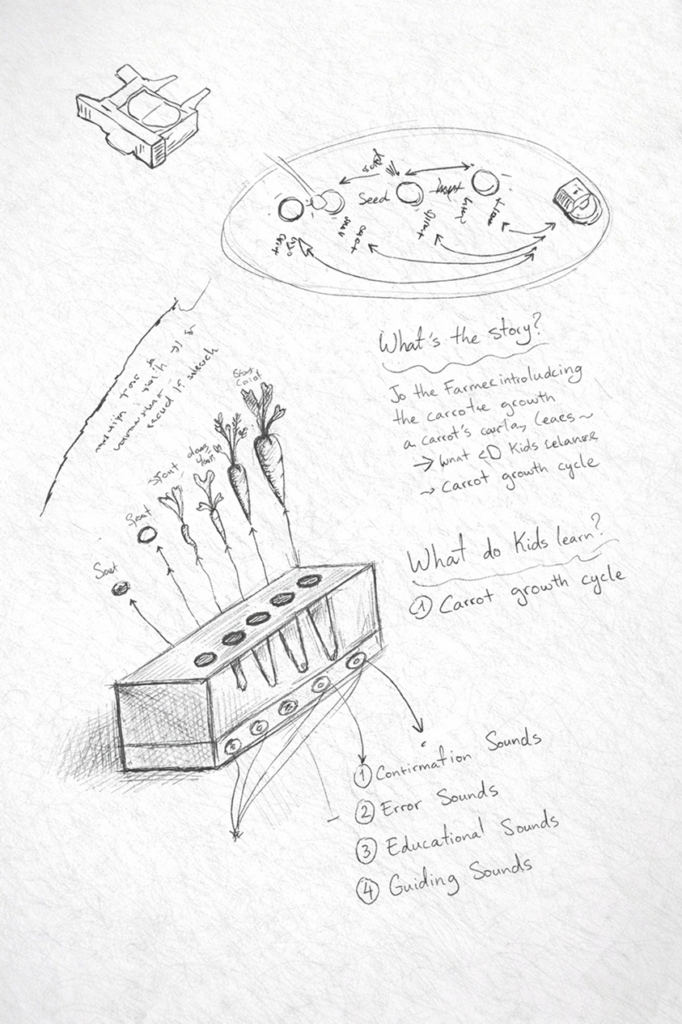
The game is built around a four-stage system (seed, sprout, young carrot, and full-grown carrot) translated into physical objects with increasing size and weight. By matching each stage to its correct position, children naturally understand the concept of growth and progression.
What makes the experience effective is the combination of touch and sound. Every action triggers a response, turning learning into a continuous loop of exploration, feedback, and discovery.
Interaction Experience
The interaction is designed to feel instinctive rather than instructed. Children begin by hearing a short narrative introducing Jo and the task ahead. They then pick up a carrot stage, explore it through touch, and try to place it into the correct slot.
Each interaction is reinforced through audio feedback. A correct placement triggers a celebratory confirmation, while an incorrect one provides a gentle cue to try again. This avoids frustration and encourages confidence through play.
The stepped structure creates a clear hierarchy, guiding children through the lifecycle in a way that feels natural, even without visual guidance.
Key Features
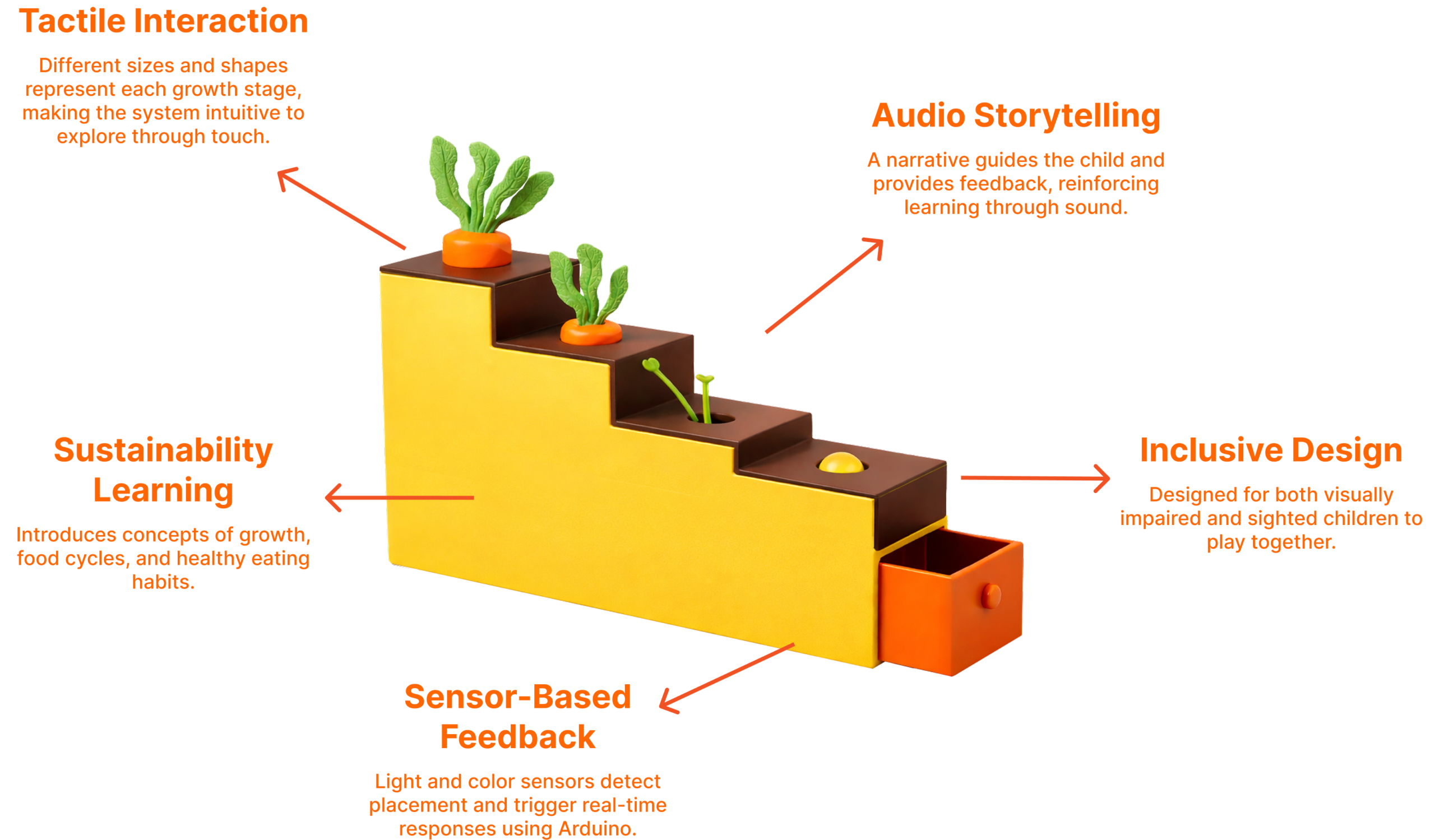
At the core of the design is a focus on tactile clarity and simplicity. Each stage is defined through distinct size, shape, and weight, allowing children to differentiate them purely through touch.
The experience is enriched by audio storytelling, where sound acts as both a guide and a reward system. Instead of instructions, children learn through listening and reacting, making the interaction feel alive and responsive.
The system is powered by sensor-based technology, where Arduino and TouchDesigner enable real-time feedback. This transforms a static object into an interactive learning tool, bridging the gap between physical play and digital responsiveness.
Equally important is the emphasis on inclusive design. High color contrast supports children with partial vision, while the physical interaction ensures accessibility beyond visual ability.
Design Process
The project began with research into accessibility, early childhood learning, and sensory interaction. A key insight was that children in this age group rely heavily on physical exploration and immediate feedback, rather than abstract systems.
Early concepts explored different forms, including a circular layout. However, through discussion and testing, it became clear that this could create confusion about where to begin. The design evolved into a stepped structure, introducing a clear starting point and reinforcing the idea of progression.
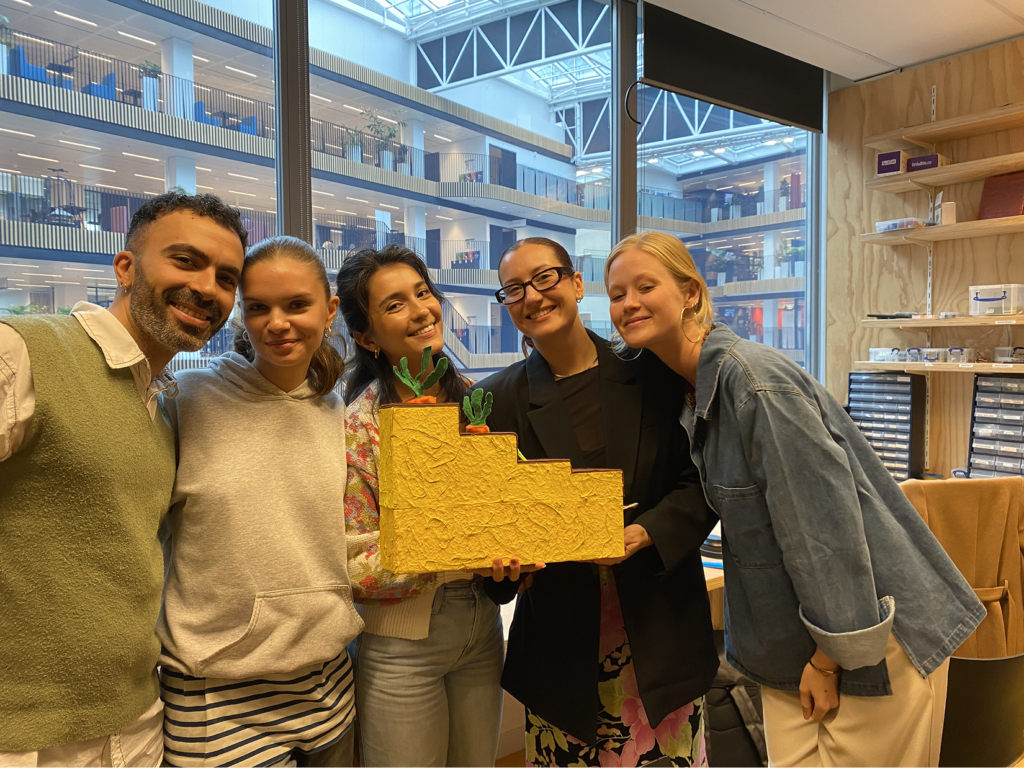
Prototyping played a central role throughout the process. Physical models and sketches were used not only to test ideas but also to communicate within the team, making abstract concepts tangible.
On the technical side, the team experimented with Arduino and TouchDesigner. This exploration allowed us to translate interaction into real-time sensory feedback, making the storytelling more immersive and meaningful.
Testing & Validation
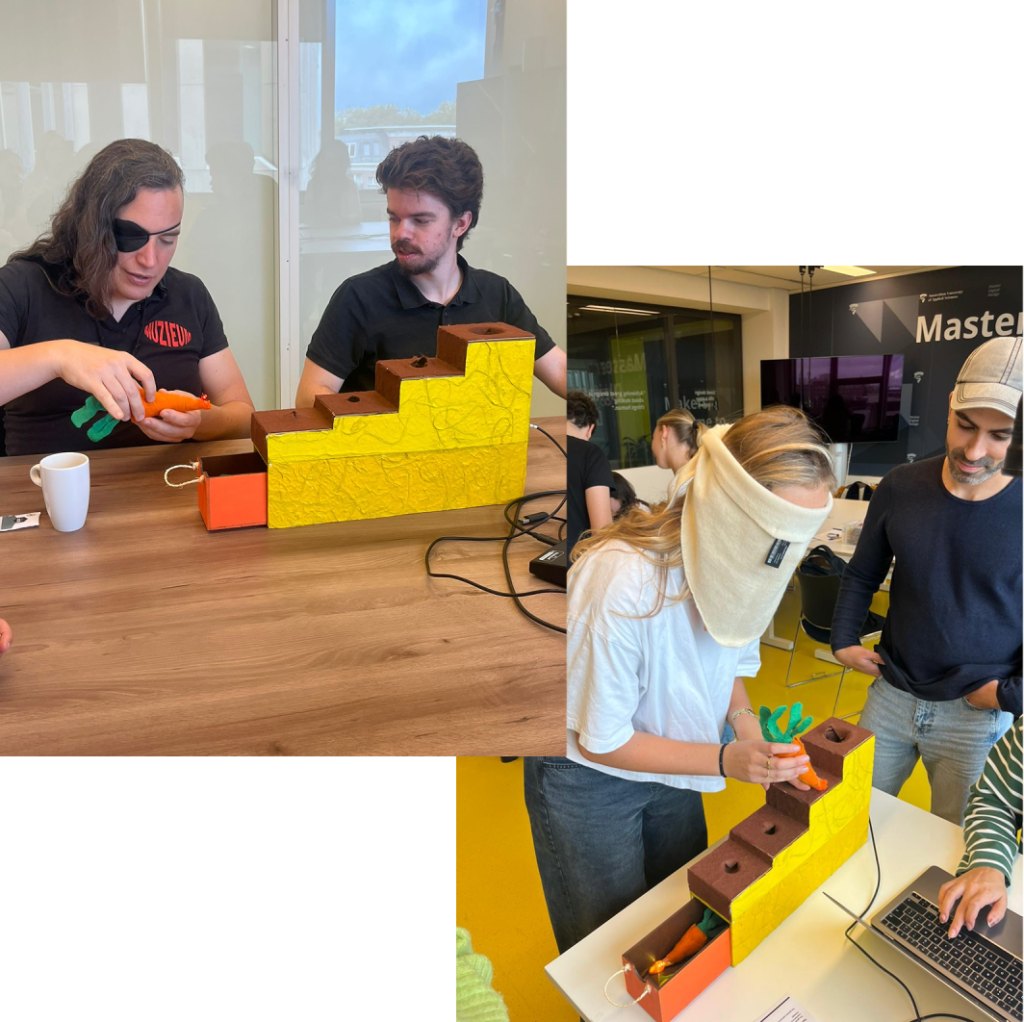
The game was tested with both visually impaired and sighted children, focusing on how they interacted with the system without guidance.
The results showed that children were able to understand the matching logic quickly, using size and shape as primary cues. The audio feedback proved essential in guiding behavior, helping children self-correct without frustration.
An important outcome was that the game naturally encouraged collaborative play, allowing children of different abilities to engage with the same experience in their own way.
Impact
Grow with Jo transforms learning into a hands-on sensory experience, shifting away from screen-based or instruction-heavy methods. It allows children to learn by doing, building understanding through interaction rather than explanation.
Beyond the lifecycle of a carrot, the game introduces broader ideas of sustainability, food systems, and healthy habits, making abstract concepts tangible at an early age.
What did I learn as a designer from this project?
This project challenged me to design beyond visual aesthetics and focus on experience through multiple senses. It showed me how powerful simplicity and clarity can be when designing for accessibility.
Working with physical prototyping and technology pushed me out of my comfort zone, and taught me how interaction design can bridge storytelling and tangible experience.
It also reinforced the importance of testing, iteration, and collaboration, where the best solutions often emerge through continuous refinement rather than initial ideas.
What is next?
The concept can expand into a broader system that explores different vegetables, food cycles, or farming processes, creating a series of educational tools. Introducing additional interactions, such as watering, sunlight, or care-based actions, could deepen the experience and teach responsibility.
With further development, Grow with Jo has the potential to become a commercial educational product, combining playful interaction with meaningful learning.